
Tag: taylors-version

  • When Home Wore Your Name…

    The past few days, I’ve found myself reflecting deeply on the last three years of my life—how they’ve shaped me, transformed me, and continue to quietly guide the person I’m becoming. In my last blog, I explored how our experiences sculpt us, chisel away the unnecessary, and sometimes painfully, sometimes beautifully, bring out the core of who we are. That thought has lingered this entire week, following me like a shadow I’m learning to acknowledge.

    Right now, I’m 30,000 feet in the sky, writing this mid-flight, as the darkness of the midnight sky presses against the window beside me. My thoughts, like always, begin to wander—to the past, to the people I’ve loved, and inevitably, to the idea of home.

    What is home, really?

    Is it a place—brick walls, familiar corners, the aroma of something cooking on a lazy Sunday? If so, then living away from that place for the last 3.5 years has been nothing short of a blessing. In this time, I’ve learned more than I ever did in the 22 years I spent sheltered within it. I’ve grown, crumbled, built myself back, and found grace in discomfort. I’m grateful for every lesson, no matter how harsh.

    But… what if home isn’t a place?

    What if home is a feeling? A fleeting sense of comfort that rests in moments or people. What if home is a conversation, a glance, a familiar silence that doesn’t ask you to be anything other than yourself?

    If that’s true—if home is a feeling—then it’s transient. It shifts, transforms, and maybe, just like love, it evolves with time. Does that mean love and home are synonymous? I don’t know. But I do know I’ve spent nights chasing the answer to this very question.

    I’m reminded of a lyric from Taylor Swift’s Florida!, where she sings:

    “Little did you know,
    Your home’s really only a town
    You’re just a guest in…”

    That line always hits me hard. Because maybe that’s it. Maybe home isn’t a location on a map. Maybe it’s a person. A presence. A connection. The life you begin to build with someone. And what a terrifyingly beautiful idea that is—to find your home in another human being.

    It’s comforting, yes. But also unsettling. Because the deeper that comfort grows, the more unbearable the thought of losing it becomes. Once you feel it, you understand why love has sparked wars, inspired poetry, moved civilizations. It all begins so simply—perhaps with a childish crush, a shared playlist, a familiar phrase. Then, before you know it, their quirks become the reasons you fall in love all over again. The way they scrunch their nose when they laugh. The way they steady you in a crowded room. The way their eyes find you in silence, saying things their words never could.

    And slowly, you become part of them. And they, part of you.

    Then one random Sunday, you catch yourself daydreaming. A home with French windows, sunlight streaming across a kitchen island. The smell of pancakes and coffee filling the space. Someone you love, dancing lightly to his favourite music in an apron, completely unaware of how breathtakingly peaceful he looks. That’s when you realise: this isn’t just love—it’s home. In all its quiet, chaotic, overwhelming beauty.

    But—this is not the end of the story.

    Because I overthink. I overfeel. And the story doesn’t stop at the dream.

    Instead, my mind drifts back. To the homes I built in the past. The fairy lights, the Polaroids now faded and covered in dust. The warm glows now turned cold. The record player that once played Presley? Silent. Forgotten. I see my demons peering back at me from memories I once called sacred. And yet, even as I hold on to the dream—of sunlight in the kitchen, of laughter echoing off quiet walls—I can’t help but feel the weight of memory tug at the edges. Love, I’ve learned, doesn’t always stay. Sometimes it slips through your fingers just when you think you’ve caught it. And sometimes, the same hands that once held you gently are the ones that let go.

    So I find myself suspended between hope and hesitation. Between the comfort of dreaming and the ache of remembering. I trace the outlines of old homes I once found in people who now live only in footnotes of my story—beautiful, painful chapters I still read in quiet moments.

    And then, as always, the spiral begins again.

    And I wonder: will love stay this time? Is this the end of all the endings?

    Or will I look back, years from now, at this dream I dared to call home, wearing a smile I no longer mean—haunted by the echo of what could have been?
    Let me know your thoughts

  • The Ghost of Christmas Past

    Remembering you comes in waves…and tonight I am drowning.

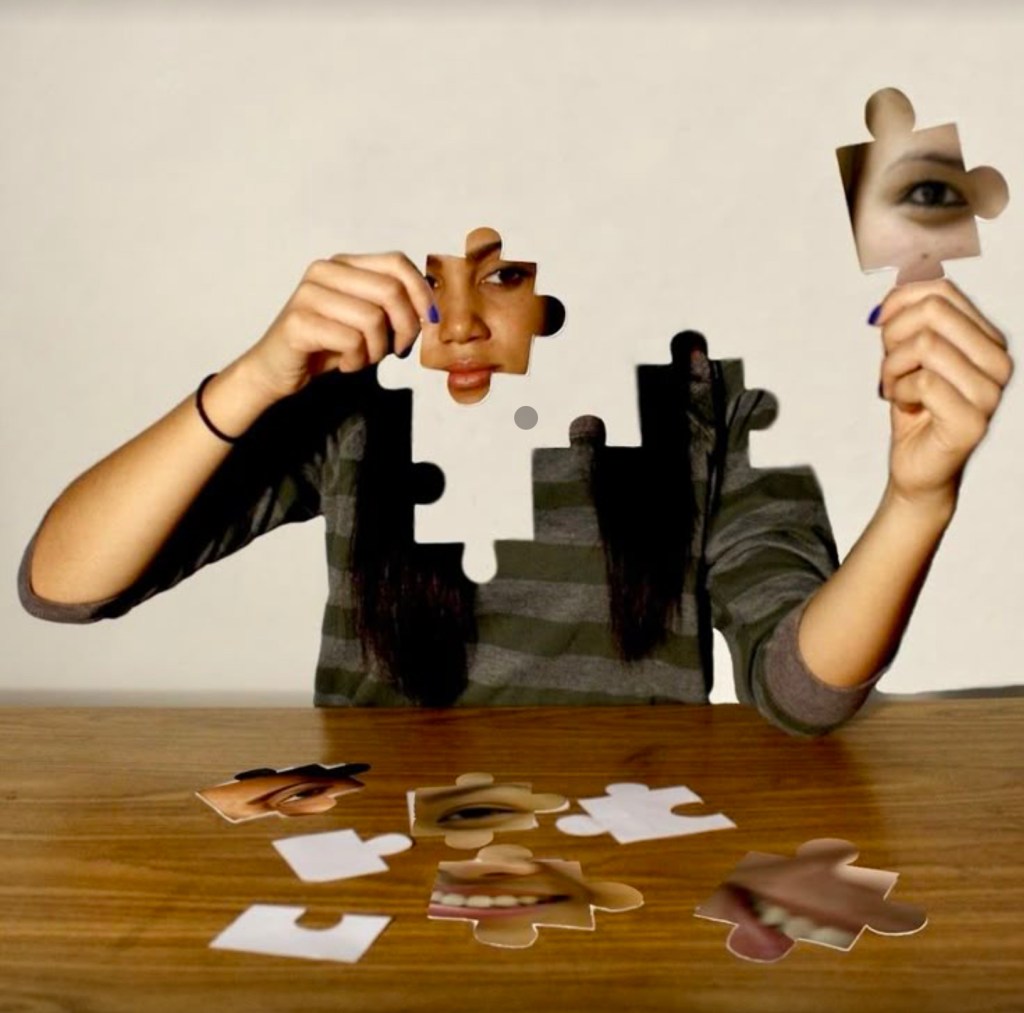
    Yesterday someone told me that we are not living in the past, we are learning and unlearning our lessons and that has to be one of the most relatable thing I have heard in a long time. Our past is what makes us- whether we accept it or not. The nature of your first friendship at school affects the way you interact with people your age upto a certain point. The place you grow up in, the school you go to, the people you surround yourself with- you pick up bits and pieces of everything as you go through life. I believe we are all like jigsaw puzzles- made of a million pieces, all in harmony- to create a unique blend of a person.

    But is it always in our best interest? What I mean to ask is- the habits, the memories, the nuances we carry within us- does it always help us build a better life or can it become an obstacle somewhere down the lane? I believe that it’s both. As we move forward, it becomes clear that not every part of our past is meant to accompany us. Some memories serve as gentle reminders of how far we’ve come, while others quietly weigh us down, making each step forward a little heavier than it needs to be. Habits born out of survival or heartbreak can, over time, harden into patterns that no longer protect us but instead confine us. And yet, even these burdens have shaped us in ways that are deeply human. They have taught us resilience, compassion, and patience—even if, at times, through pain.

    Life, it seems, is an endless dance between holding on and letting go. There’s a kind of art to knowing which parts of your story to weave into your present and which ones to leave respectfully in the past. It’s not about erasing anything, but about understanding that healing often means rewriting the narrative we once accepted as final. Growth asks us to be both tender with who we were and brave enough to imagine who we can still become.

    There are some loves you never truly outgrow. Once you have loved someone in your early years and gotten your heart broken, the remnants of that relationship don’t simply disappear—they settle quietly inside you, shaping the way you love forever. Even years later, if you notice a pattern in your new partner that even remotely resembles your past lover, something inside you stirs. Without meaning to, you go into self-destruct mode. You react instinctively, clinging to old fears rather than giving yourself the chance to realize that this time, it could be different. You make decisions rooted in memory, not the present moment.

    And that’s the heartbreak within heartbreak: once you have truly known someone and cared for them deeply, you are forever intertwined with them in ways you don’t always understand. Even when you no longer think about them consciously, one misstep, one misunderstanding, can catapult you right back to those long-forgotten days—back to the ache you thought you had outgrown.

    Is it fair to your new partner—to bear the weight of wounds they didn’t cause? Maybe not. Are we aware of this unfairness? Absolutely. But knowing doesn’t always make it easier. Sometimes, it’s not a choice at all. It’s a reflex, an invisible shield we raise before we can even name what we’re protecting ourselves from. And when the dust settles, when the anger and fear quiet down, we are left hoping—desperately—that this time, love will stay. That despite our attempts to push it away, someone will choose to understand us, to stand beside us through the ruins.

    Healing is messy. It’s not a straight line or a single, sweeping act of closure. It’s a tug-of-war between the person you were when you were hurt and the person you are trying so hard to become. Loving again after heartbreak demands more than courage—it demands radical self-awareness and a deep, patient kindness, both for yourself and for those who dare to love you despite the splinters. Every new relationship carries a quiet, trembling hope: that we are not too broken, that love can outlast the echoes of old pain.

    Maybe that’s what real love looks like—not perfect, not untouched by the past, but resilient enough to build something beautiful in spite of it. Maybe real love is choosing, every day, to believe in the possibility of healing. Maybe that’s how we finally set ourselves free—not by forgetting where we’ve been, but by daring to hope for where we can still go and maybe, just maybe, finally relate to these words:

    And by mornin’

    Gone was any trace of you, I think I am finally clean.

    Let me know your thoughts