
Yesterday, I was reading Josh Kaufman’s “The Personal MBA”- what an amazing book to read if you want to start thinking rationally and get yourself acquainted with the nuances of business. I have forever thrived on knowing how various systems work; which is why I talk to people from all walks of life- try and get to know their field of interest. Another reason why I like this book is – it shows the expanse of the author’s knowledge. He doesn’t come off as a know-it-all but a scholar with a purpose of passing down the information to the next generations- basically democratise information around a field that’s complicated for the common man- and therefore considered to be shrouded in mystery.
Well, that being said- I am not promoting the book or the author. This is not a paid advertisement. The reason why I write a few lines about the book is because I found my inspiration to write for this blog again in “The Personal MBA”. I came across a concept called “The Iteration Cycle”. It’s a basic concept applied to the field of business. The official definition goes something like this:
“The Iteration Cycle is a process you can use to make anything better over time. There’s nothing wasteful about the inevitable changes and revisions that these artists made to their creations: every iteration brought the project one step closer to completion.”
This made me think how difficult we have made things for ourselves and how the society has added even more baggage to it by convincing us that we need to get everything right the first time. For example, a 17 year old who thought that she was passionate about biology, according to society standards, dare not say that at the age of 24 she is now interested in business or management or maybe politics. I believe that humans are born with a tinge of hypocrisy in them. We can appreciate deviation when the same proves to be successful for the one person who has attained fame, otherwise, it’s a big no-no. In an excerpt preceding the definition of the concept behind the Iteration Cycle, Kaufman very beautifully says,
“The ceiling of the Sistine Chapel is covered with hundreds of millions of very small brushstrokes, each of which brought the resulting masterpiece one step closer to completion. It took Michelangelo millions of hammer strokes to turn a crude block of marble into David”.
Now imagine yourself to be an artist creating a piece. Will you like every stroke of charcoal or pencil or brush on that blank canvas? Will you think of yourself as a failure if you need to use an eraser to undo something you just did? No right? You will look at the stroke, decide if you like it or not and erase it to approach it from a different angle. The thing that you won’t do is – do the same thing and expect different results. As long as you are improvising and pursuing your passion- sooner or later you will also have created your own masterpiece. Now if this is acceptable in any form of art- be it songwriting, painting, writing the first draft to your story or sports- then why not in life? Why are career changes looked at with a hint of disapproval? If you are not passionate about something, or if you don’t get excited about something the way you thought you would- stop pursuing it! That’s it. There is no better way of saying it. While it is a very cliche thing to say, it is true- if you don’t like what you do- you are meant for something else.

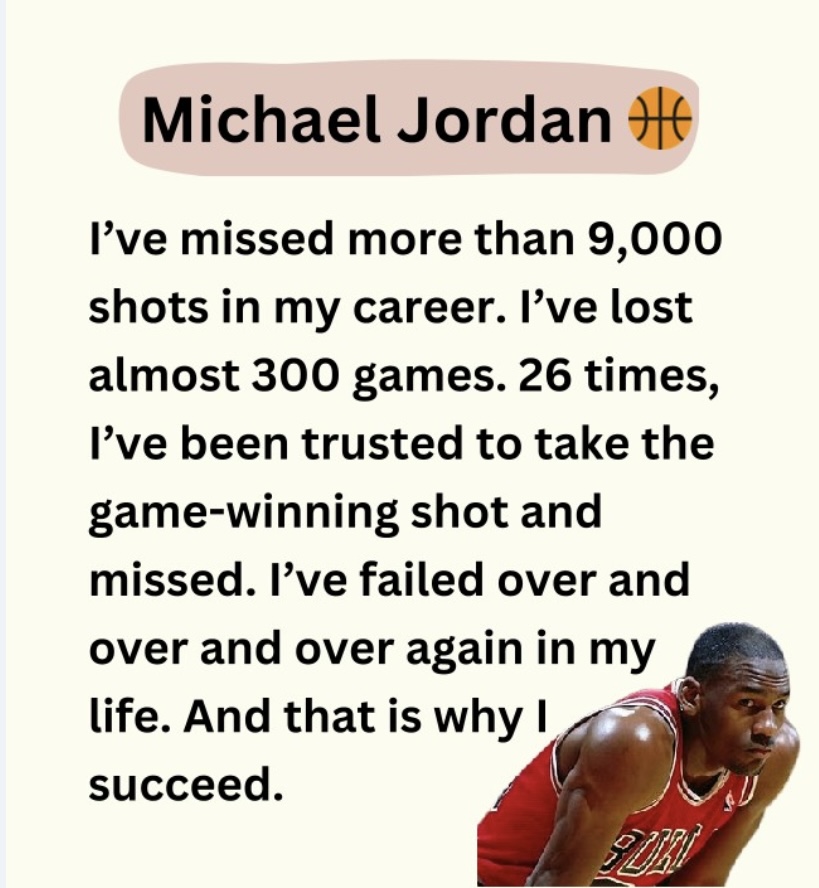
As a society, we have taken away from ourselves the right to fail. Something that is intertwined with success in every way. Every single time we fail we take it to heart- because often times that is exactly how we are programmed. But how do we understand if our career’s prototype is suitable for us in the long run if we do not give ourselves the chance to fail? So give yourself the liberty to fail, to face a setback, go back to the basics and approach the problem from a different angle. As long as you are asking the right questions and not letting yourself become overwhelmed with emotions- you can always get up and try again. Consider your career to be an experiment and follow the below steps as suggested by Kaufman (although for a completely different scenario, but I think it fits perfectly here):
- Observe what’s happening and identify something that you’d like to improve.
- Design an experiment and identify the indicators that will tell you whether or not the prospective change is an improvement.
- Conduct the experiment and collect data (Maybe do an internship in your preferred field and see if you genuinely like it?)
- Evaluate the results of the experiment.
- Accept or reject the change as an improvement.
You were not meant to be acting according to the dictates of the society- so try out what you want to do and let yourself fail. No known success ever came without the unknown failures!

 Penny's World