Tag: personal-growth

  • The Mirror Principle: Reflecting Relationships

    A week or two ago I was talking to someone over Instagram and said something very mature which I later wrote on my Journal app and posted as a status on WhatsApp. Now before I dive into this blogpost- anyone remembers the Justin Timberlake song “Mirrors”? If you don’t, the following lyrics forms the centre point for this blog-

    ‘It’s like you’re my mirror

    My mirror staring back at me…’

    Okay enough of an introduction- let’s dive right in. During the aforementioned Instagram chat we were joking about human behaviour in correlation with one another. For example, you would not talk to your best friend the way you talk to your boss at the office. During such banter, my friend asked me to describe my own behaviour in as few words as possible- and in that very moment I came up with the perfect metaphor to give an answer to this question. I said I consider myself to be a mirror that does not distort the reality out of proportions. I am the mirror that reflects that reality with all its nuances. This is to say that I mimic the person in front or the person I’m having a conversation with. I give as much attention, respect, love, decency, importance etc as I have gotten from you.

    For years I have been the person who replied to texts within minutes or picked up a call on the first or third ring depending on my situation. It did not really matter if the person calling or texting was my best friend, partner, parents or an acquaintance – I was always available; till I wasn’t anymore. This change in behaviour showed me something very important- some times you have got to give back what you get- for your own sanity. Such a shift in my nature gave me clarity too- clarity about the people I want to keep in my circle. If you have been reading my blogs- you know the 50-30-20 principle I use for my emotional budgeting. While that is an effective tool to make sure that you are not bending yourself backward to help someone out- the same principle clubbed with my mirror analogy ensures an added filter. What exactly does it do? Let me give you an example with which most of us, if not all, would relate. You meet someone by happenstance maybe through a mutual friend, or at a club, or via an app or any other ways that are norms of the day. You talk to each other and there is an instant spark and you start talking to each other for longer hours characterised by prompt replies, words of affirmation or validation- maybe a little too much of that. You start feeling like having your dream-come-true moment. And then comes the period where the replies grow inconsistent. You start thinking what went wrong, if you should hav given them a chase rather than becoming all gooey and you start going down the spiral. You become restless and reply to a text received after 3 hours within 3 seconds and the whole cycle of waiting and wondering begins again. Sounds familiar? Well we have all been victims of this and more often than not we have blamed it on the heart- when all it’s doing is pumping blood!

    Now how does my mirror principle help here? The mirror principle states that I would be a reflection of how you treat me. For example, if you are a genuinely good texter- so am I, of course not at the cost of the work I have got to do. If you talk to me respectfully, I give it right back. If you pretend like you have to wait for your pigeon to send me back a reply by writing a letter without any valid reason- that’s exactly what you are going to get back. The fun thing about the mirror principle is that as long as you are giving back respect, validation, time – anything that is, in general, positive- no one would have any issues with you mimicing them. The problem starts when you start acting aloof with someone who has treated you like you don’t matter.

    It has taken me years to perfect this practice at the cost of losing out on connections, but you have got to prioritise your own sanity over connections who have a pattern of resurfacing when they need something from you. Know your worth! That’s it. This has been one of the most important lessons that has bamboozled people across generations. Some people understand it early on in life – our alpha males or alpha females with a mesmerizing personality. While some of us struggle understanding our worth in someone’s life, including me. So mirroring their actions after giving them a couple chances has helped me remain approachable but not at the cost of my self respect.

    So, what’s the takeaway from all of this? Simple—match energies, but don’t drain yourself trying to keep a connection alive when the effort isn’t mutual. The mirror principle isn’t about playing games; it’s about valuing yourself enough to give back only what you receive. And if someone finds it unfair, well, maybe they should take a good look at how they’ve been treating you. After all, a mirror never lies—it only reflects.

    At the end of the day, your time, attention, and emotions are valuable. If someone treats you with care, kindness, and consistency, you reciprocate. But if they make you feel like an afterthought, then why should you do any different? The beauty of the mirror principle is that it puts the power back in your hands—you’re no longer waiting, guessing, or overextending yourself. You simply reflect. And in doing so, you protect your peace, your dignity, and your worth.


  • The Iteration Cycle: Fostering Personal and Career Development

    Yesterday, I was reading Josh Kaufman’s “The Personal MBA”- what an amazing book to read if you want to start thinking rationally and get yourself acquainted with the nuances of business. I have forever thrived on knowing how various systems work; which is why I talk to people from all walks of life- try and get to know their field of interest. Another reason why I like this book is – it shows the expanse of the author’s knowledge. He doesn’t come off as a know-it-all but a scholar with a purpose of passing down the information to the next generations- basically democratise information around a field that’s complicated for the common man- and therefore considered to be shrouded in mystery.

    Well, that being said- I am not promoting the book or the author. This is not a paid advertisement. The reason why I write a few lines about the book is because I found my inspiration to write for this blog again in “The Personal MBA”. I came across a concept called “The Iteration Cycle”. It’s a basic concept applied to the field of business. The official definition goes something like this:

    “The Iteration Cycle is a process you can use to make anything better over time. There’s nothing wasteful about the inevitable changes and revisions that these artists made to their creations: every iteration brought the project one step closer to completion.”

    This made me think how difficult we have made things for ourselves and how the society has added even more baggage to it by convincing us that we need to get everything right the first time. For example, a 17 year old who thought that she was passionate about biology, according to society standards, dare not say that at the age of 24 she is now interested in business or management or maybe politics. I believe that humans are born with a tinge of hypocrisy in them. We can appreciate deviation when the same proves to be successful for the one person who has attained fame, otherwise, it’s a big no-no. In an excerpt preceding the definition of the concept behind the Iteration Cycle, Kaufman very beautifully says,

    The ceiling of the Sistine Chapel is covered with hundreds of millions of very small brushstrokes, each of which brought the resulting masterpiece one step closer to completion. It took Michelangelo millions of hammer strokes to turn a crude block of marble into David”.

    Now imagine yourself to be an artist creating a piece. Will you like every stroke of charcoal or pencil or brush on that blank canvas? Will you think of yourself as a failure if you need to use an eraser to undo something you just did? No right? You will look at the stroke, decide if you like it or not and erase it to approach it from a different angle. The thing that you won’t do is – do the same thing and expect different results. As long as you are improvising and pursuing your passion- sooner or later you will also have created your own masterpiece. Now if this is acceptable in any form of art- be it songwriting, painting, writing the first draft to your story or sports- then why not in life? Why are career changes looked at with a hint of disapproval? If you are not passionate about something, or if you don’t get excited about something the way you thought you would- stop pursuing it! That’s it. There is no better way of saying it. While it is a very cliche thing to say, it is true- if you don’t like what you do- you are meant for something else.

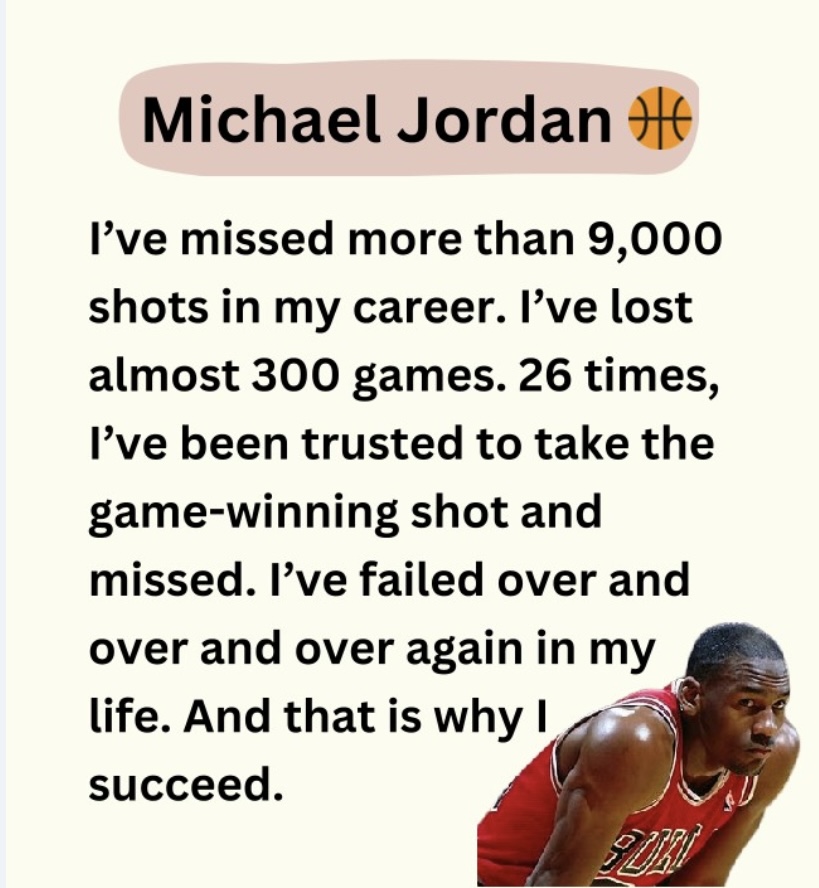
    As a society, we have taken away from ourselves the right to fail. Something that is intertwined with success in every way. Every single time we fail we take it to heart- because often times that is exactly how we are programmed. But how do we understand if our career’s prototype is suitable for us in the long run if we do not give ourselves the chance to fail? So give yourself the liberty to fail, to face a setback, go back to the basics and approach the problem from a different angle. As long as you are asking the right questions and not letting yourself become overwhelmed with emotions- you can always get up and try again. Consider your career to be an experiment and follow the below steps as suggested by Kaufman (although for a completely different scenario, but I think it fits perfectly here):

    • Observe what’s happening and identify something that you’d like to improve.
    • Design an experiment and identify the indicators that will tell you whether or not the prospective change is an improvement.
    • Conduct the experiment and collect data (Maybe do an internship in your preferred field and see if you genuinely like it?)
    • Evaluate the results of the experiment.
    • Accept or reject the change as an improvement.

    You were not meant to be acting according to the dictates of the society- so try out what you want to do and let yourself fail. No known success ever came without the unknown failures!

  • The 50-30-20 Rule: Time Over Money

    What do you think of when you hear the “50-30-20 rule”? Does your mind immediately take you to financial budgeting? Well, I don’t blame you in this regard. All our adult life we listen to this principle in relation to money and how to judiciously spend the same- ensure that we enjoy our present but save enough for our future and any emergencies that we might encounter in this lifetime. Most of us struggle maintaining this in today’s economy and therefore prioritise either of those goals while some of us have attained mastery in this subject. However, that is not to say that some of us are just reckless with money- it just means that our situations don’t allow us to follow a set of principles with regards to one of the most important resources of the human life: money.

    Now, I have a question to all of you- is money the most important resource that we have in this precious little life of ours? I believe not. I believe that it is one of the most important resources- to me time is more important than money. We have a chance of getting back the money we lost but not time. Time is transient- once it’s gone; it’s gone. Like, no matter how much we crave to get our childhood days back- we can never get them back. Therefore, my conclusion of time being more precious, more important and therefore deserves much more attention. So, what if I say that the 50-30-20 rule can also be applied to time and emotional availability?

    I have struggled with emotional availability for a long time till I had to take things into my own hands. I found it difficult to say to people that I was unavailable when they needed something for me. Due to this personality trait of mine I have ended up deprioritising myself or my own needs, until I devised a simple plan for myself. Each person has a certain emotional bandwidth and to just spend all of it on the wants and needs of others just does not sit right with me. Therefore the plan and in the spirit of democratising my life for my readers, I write this blog.

    THE 50-30-20 PLAN:

    The plan looks something like this:

    1. I assign 50% of my time to my professional network. This includes both my time as well as my emotional availability for cold emailing, LinkedIn networking, coffee chats, reading newspapers or newsletters, articles or simply indulge in any networking events. You might be thinking why the lion’s share of my availability goes into this segment of my life. Well, my career forms a huge part of my life. I have a dream life which I am working towards steadily and with somewhat poise. It might not be visible to the world and sometimes not even to me- but my rational mind knows I am progressing- no matter how insignificant. Therefore, a majority share of whatever my emotional bandwidth is goes into my career and into achieving my dream life- what it looks like is a discussion for a future blog post.
    2. Now what do I do with the rest 50% of my emotional bandwidth and time availability. Well, 30% of my time is for people I hold very close to my heart- my core circle. This includes my parents, grandparents and my friends. They are my second pillar. Each and every person in this circle contributes to my growth. While majority of them complement my journey, some challenge me. You can say that these are the people who give me my drive to grind towards that dream life for which I have assigned the first 50%. It sounds absurd to have a set time limit especially for your family- but that’s just how life is. As you progress through life, it demands discipline. If you overrun every family call or every video call with your childhood friend- you end up with a pile of errands that were due day before yesterday. So what do you do? You plan and give yourself room for error. You surround yourself with people who are low maintenance. They understand the struggles you are going through. They don’t get angry when you forget their birthdays or don’t post a status with a long message. Sure they feel bad, they might as well feel like you are taking them for granted- but they never let that ruin the beautiful bond you have! It’s noteworthy to mention this here- keep people like the ones I just described very very close to yourself.
    3. We have finally arrived at the last and final segment of this plan or tool. The final 20% – I owe to myself. What I do during this time is my decision. I might spend 99% of this time and emotional budget sleeping or binging an entire season of F.R.I.E.N.D.S or maybe listen to Taylor Swift’s discography-but this is my time. I owe myself this. Each one of us go through life taking ourselves for granted. Well, that stops now. We owe ourselves so much more. While focussing on the first 80% we forget ourselves- its not to say that every other person in our life don’t deserve our time, emotional engagement or love- but always remember while your parents, your beloved or partner, your friends play a very important part in your life and you might not have achieved what you have till now without them- you went through those struggles all by yourself. No one fought your battles for you. Sure they gave you the tools to fight with- but you bear the scars. You are the one who bled, you are the one who gave up to build the dream life for yourself, your parents and your partner. It was YOU. So again, the final 20% is mine and mine alone.

    That’s it. That’s how I budget my emotions and time. Is it easy to achieve this? No, like financial budgeting, this is difficult to achieve. You might end up hurting people you hold very dear- you distance yourself from them because their goals don’t match yours. You make mistakes- a lot of them maybe. But slowly it all makes sense. This system also acts like a filter paper for your personal life. The ones who love you without strings stays right beside you when you are figuring out how to make this tool maximise your potential. And the rest of the people? Well, they sometimes fade away. As my girl Gracie Abrams said, that’s just the way life goes.